Tall vs Wide: The Eternal 4X Debate in 2026
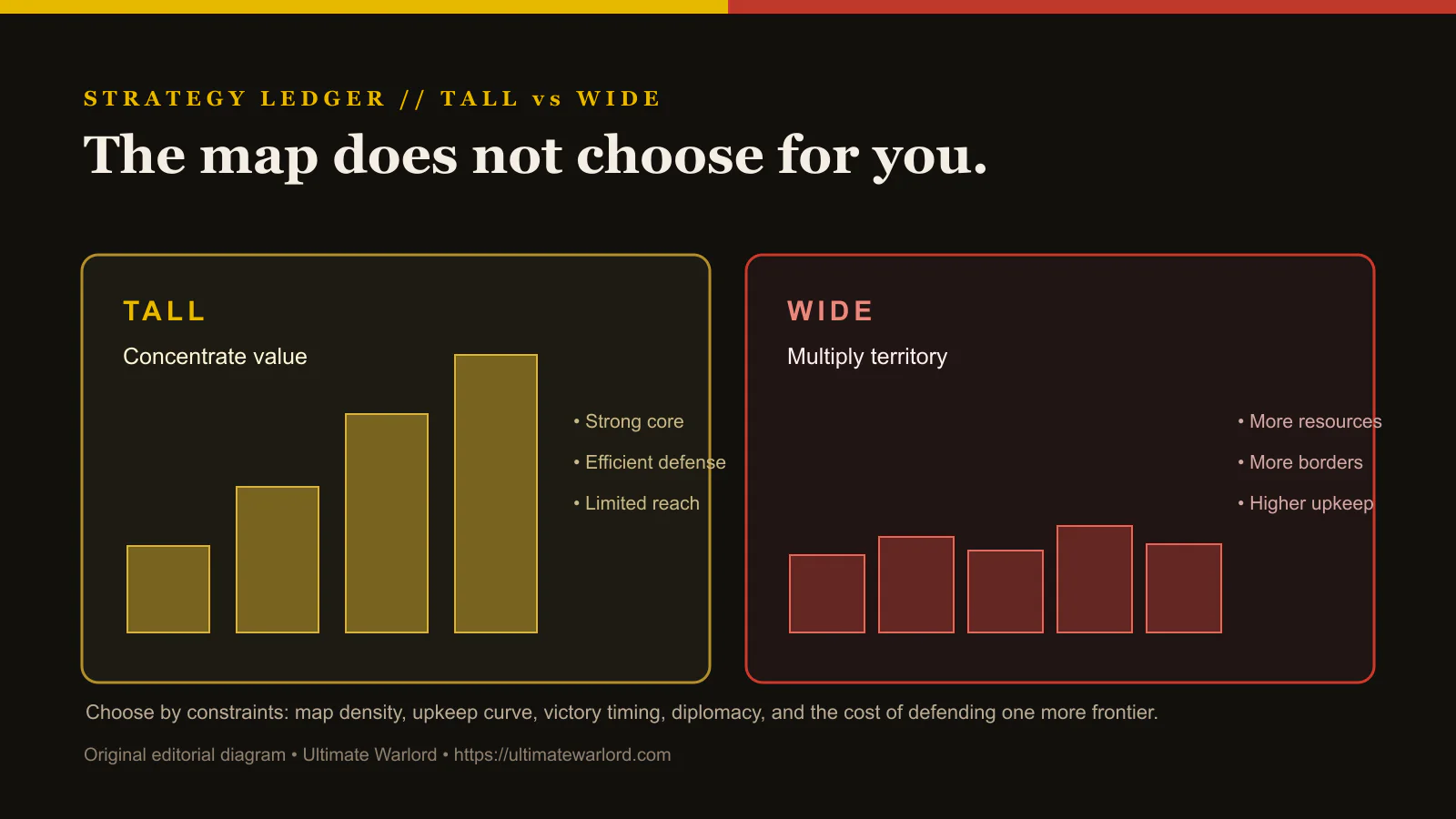
Image: Ultimate Warlord
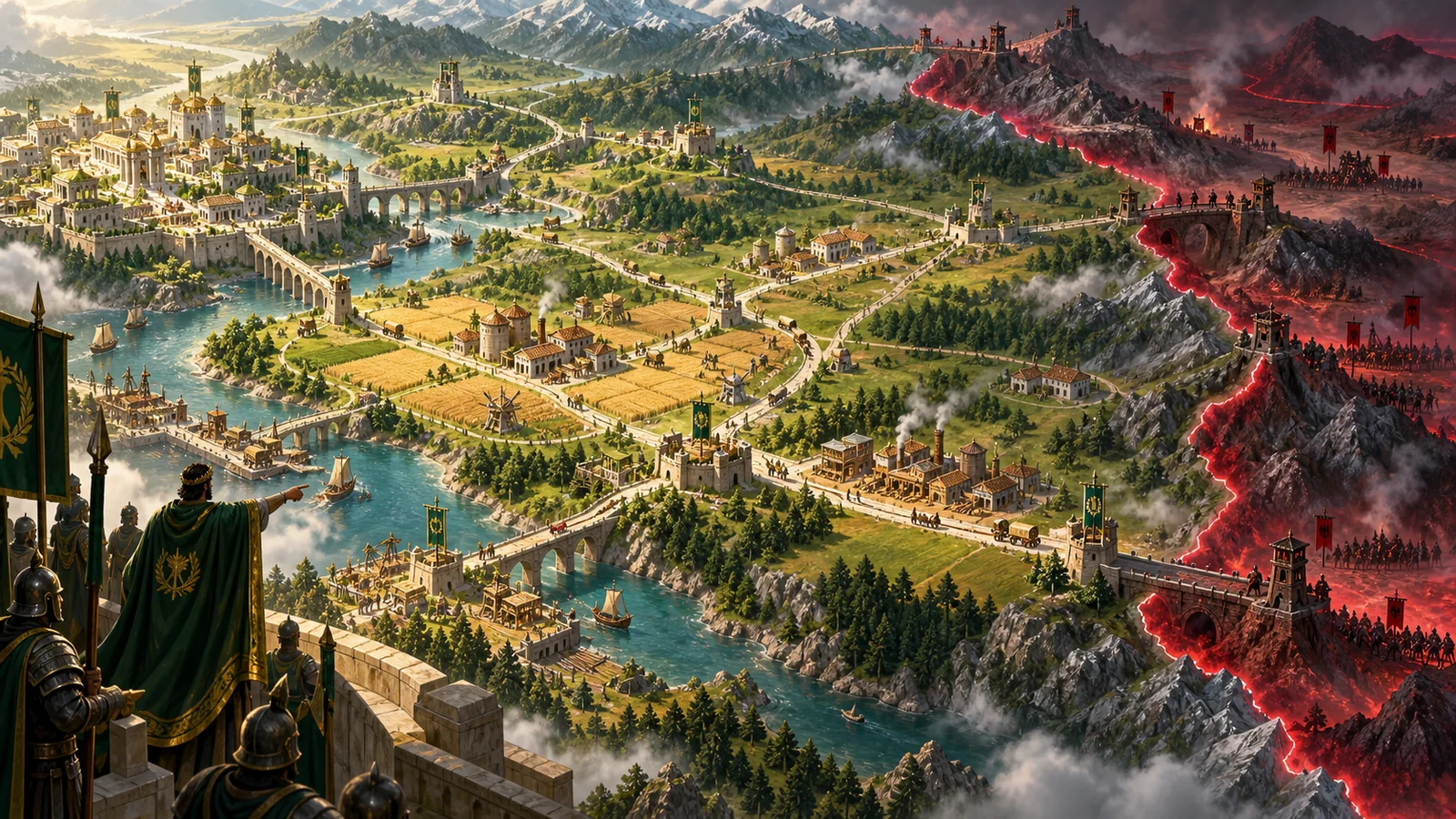
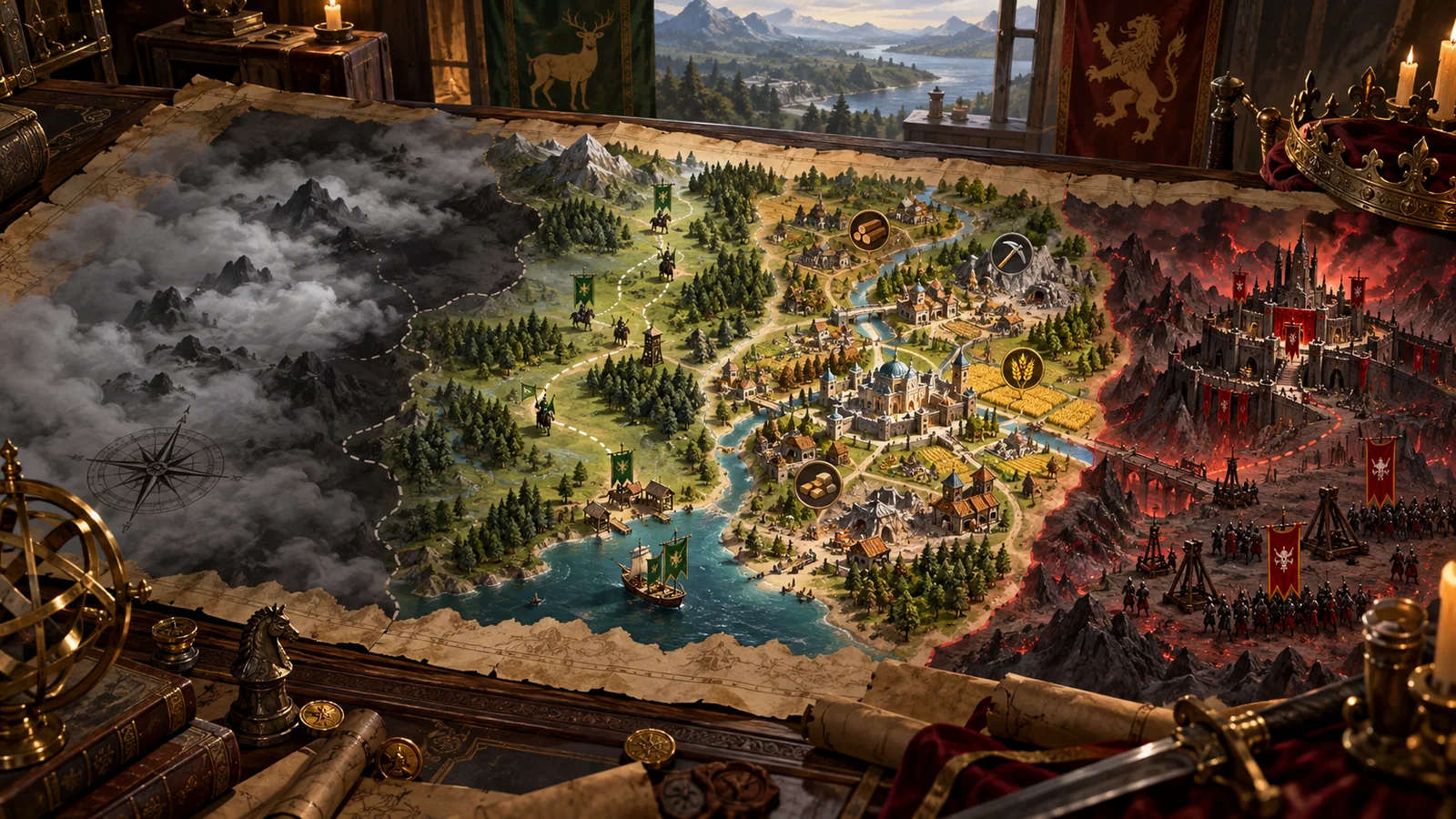
Ask a room of 4X veterans whether they play tall or wide and you will start an argument that outlives the session. Tall means concentrating your empire into a handful of powerful cities. Wide means spreading across as much territory as you can hold. The debate is one of the oldest in the genre, and in 2026 it is still one of the most misunderstood. Let us settle what can be settled and be honest about what cannot.
Defining the Terms
Tall and wide describe two philosophies of empire growth. A tall empire has few cities, each developed to the maximum, dense with buildings and specialists. A wide empire has many cities, each individually weaker but collectively producing far more.
The appeal of tall is intuitive. A concentrated empire is easier to manage, less exposed on its borders, and satisfying to optimize. The appeal of wide is arithmetic. More cities means more of everything, and in a genre where output compounds, more of everything is a powerful thing to have.
The Uncomfortable Truth About the Ceiling
Here is the part that ends many friendly arguments: in the majority of 4X games, wide has the higher ceiling. This is not opinion so much as structure. Most core outputs in these games, such as production, science, and gold, scale with the number of cities you control. A wide empire simply has more sources feeding those totals.
Tall play tends to win when a game deliberately intervenes against sprawl. Designers add mechanics precisely to keep wide from dominating: penalties that grow with empire size, happiness or stability costs per city, administrative overhead, or corruption that erodes distant provinces. When those brakes are strong, tall becomes not just viable but optimal. When they are weak or absent, wide usually pulls ahead.
So the real question is never “is tall or wide better in the abstract.” It is “how hard does this specific game punish expansion.” Read that first, and your answer follows.
A Quick Comparison
| Factor | Tall | Wide |
|---|---|---|
| Management burden | Low | High |
| Border exposure | Small, defensible | Large, stretched |
| Output ceiling | Capped by city count | Higher, scales with land |
| Vulnerability | Single points of failure | Resilient through redundancy |
| Best when | Sprawl is heavily penalized | Expansion is cheap and safe |
How to Read a Game’s Lean
Before you commit to a style, run through a short checklist to figure out which way a given title tilts.
- Does the game apply a growing penalty for each additional city? Strong penalties favor tall.
- Are there per-city costs to happiness, stability, or upkeep that scale badly? If so, tall gains ground.
- Is unclaimed good land plentiful and cheap to settle? Abundant land rewards wide.
- Do border cities suffer corruption or reduced output at distance? Heavy distance penalties push you tall.
- How punishing is defending a long frontier against the AI? Dangerous neighbors make wide riskier.
Add up the answers and the map, quite literally, tells you how to play. Most players fail not because they chose the wrong style but because they never asked the question.
Playing Each Style Well
If you go tall, lean into specialization. Pick each city’s role, stack the buildings and bonuses that serve it, and defend your small footprint fiercely. Your weakness is that losing one city hurts a lot, so protection matters.
If you go wide, prioritize a fast, clean expansion phase and then manage the penalties rather than fear them. The classic wide mistake is stopping expansion too early because the warnings look scary. Usually the extra cities are worth the trouble. The classic wide crisis is a stretched border, so plan your defense as you grow, not after.
FAQ
Is tall just the beginner-friendly option? Not exactly. Tall is easier to manage, which helps beginners, but playing tall optimally in a game that rewards wide is actually a harder challenge, not a softer one.
Can I mix the two? Yes, and strong players often do. A hybrid empire runs a few tall powerhouse cities inside a wider base. The point is to match the blend to the game’s rules.
Has the debate changed in 2026? The frame is the same, but modern designs are more deliberate about balancing the two, adding smarter penalties so neither style trivializes the game. That is healthy for the genre.
Key Takeaway
Tall versus wide is not a duel between equals. Because output scales with territory, wide usually holds the higher ceiling, and tall shines mainly when a game’s rules or map are built to punish sprawl. Stop asking which style is better in the abstract, and start asking how hard your current game brakes expansion. The answer to that question is your answer.
4Xtall vs widegrand strategystrategycivilization