Warlord Economics: Turning Territory Into Power
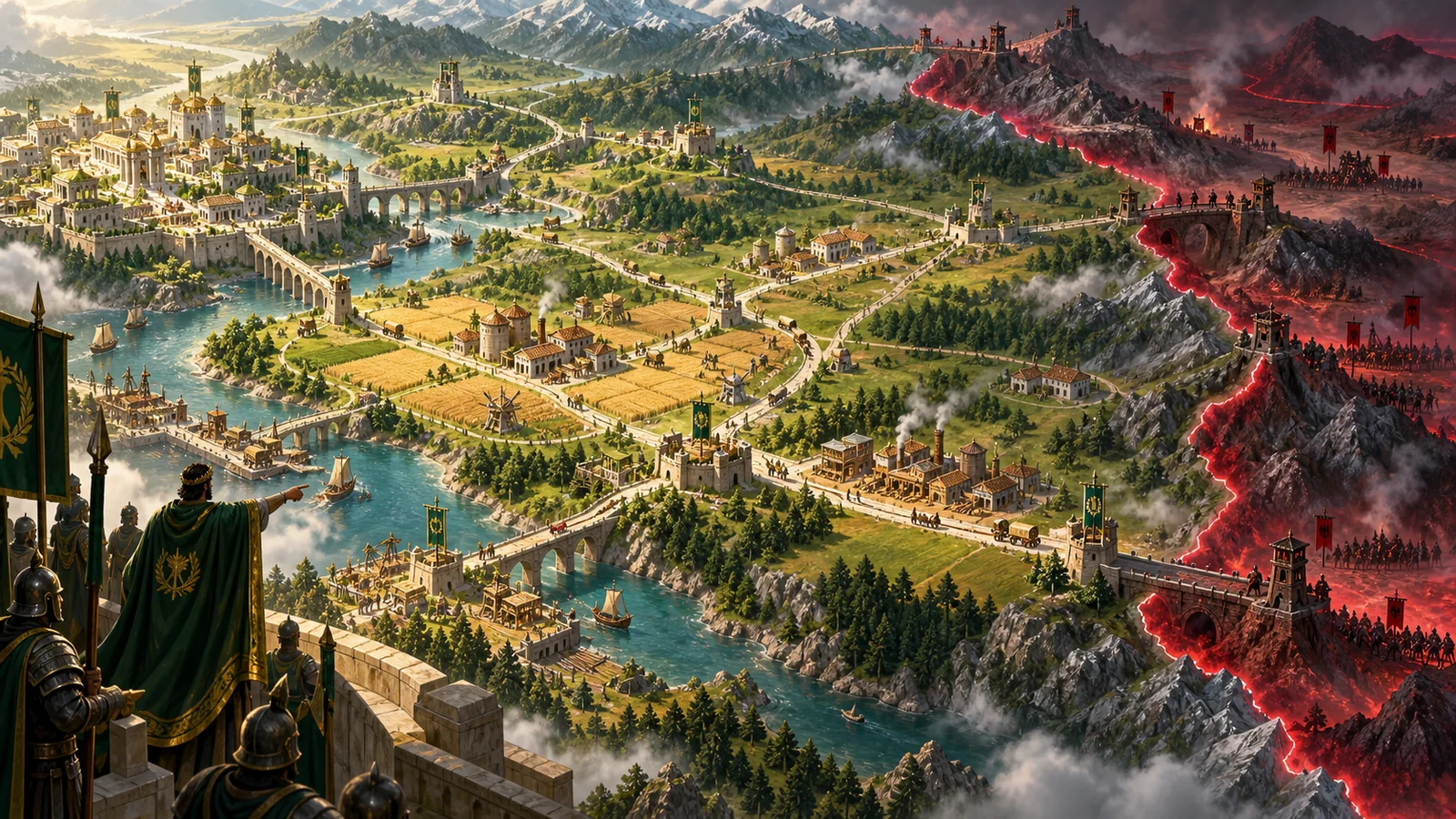
Image: OpenAI generated
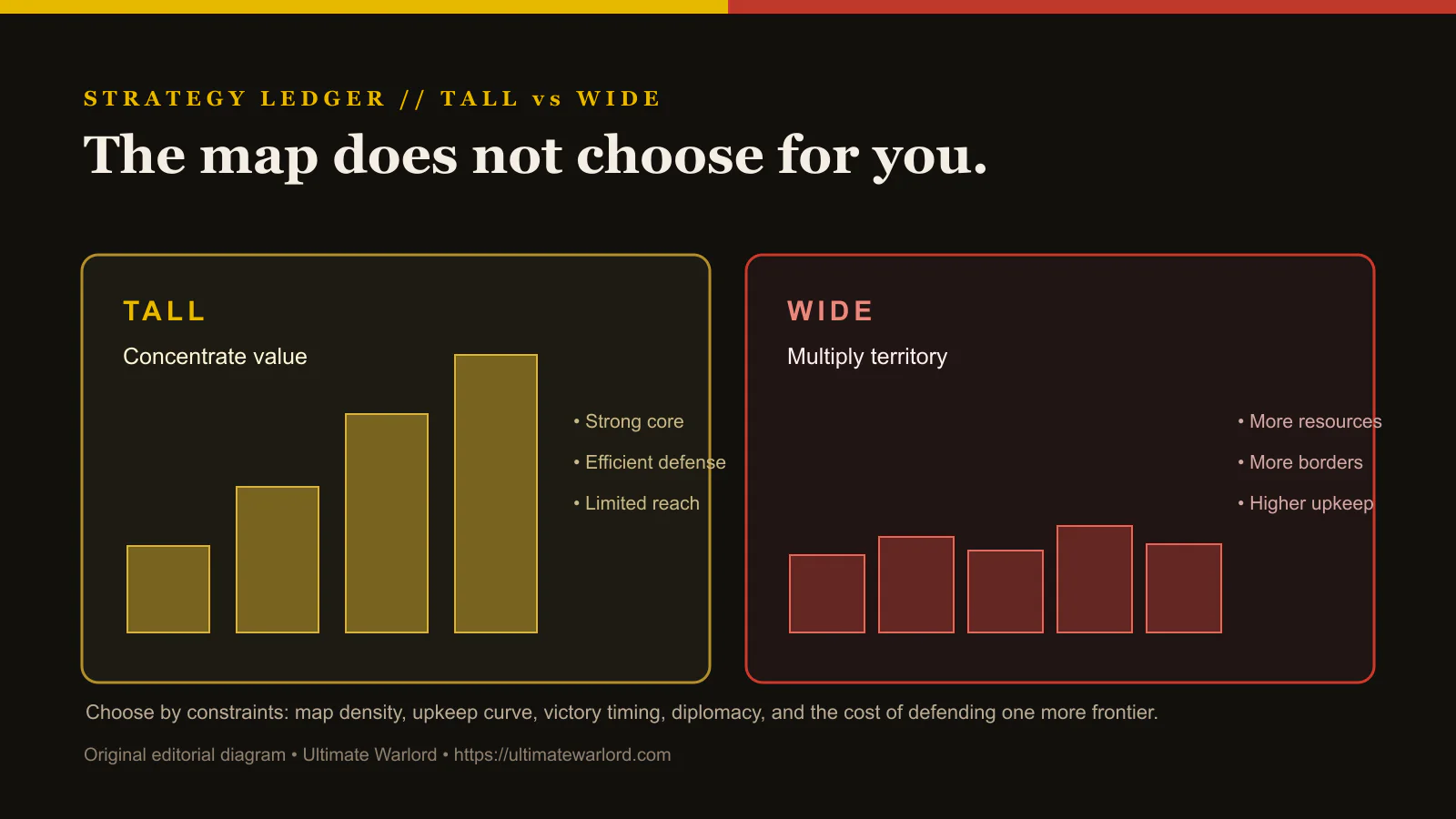
Every new warlord makes the same mistake. They see a big empire on the map and assume they are winning. Then a rival with half the land crushes them, and they never quite understand how. The answer is that territory is not power. Territory is potential power, and the gap between the two is where 4X games are actually decided. This is the discipline of warlord economics: turning ground into output, and output into force.
Territory Is a Loan, Not a Prize
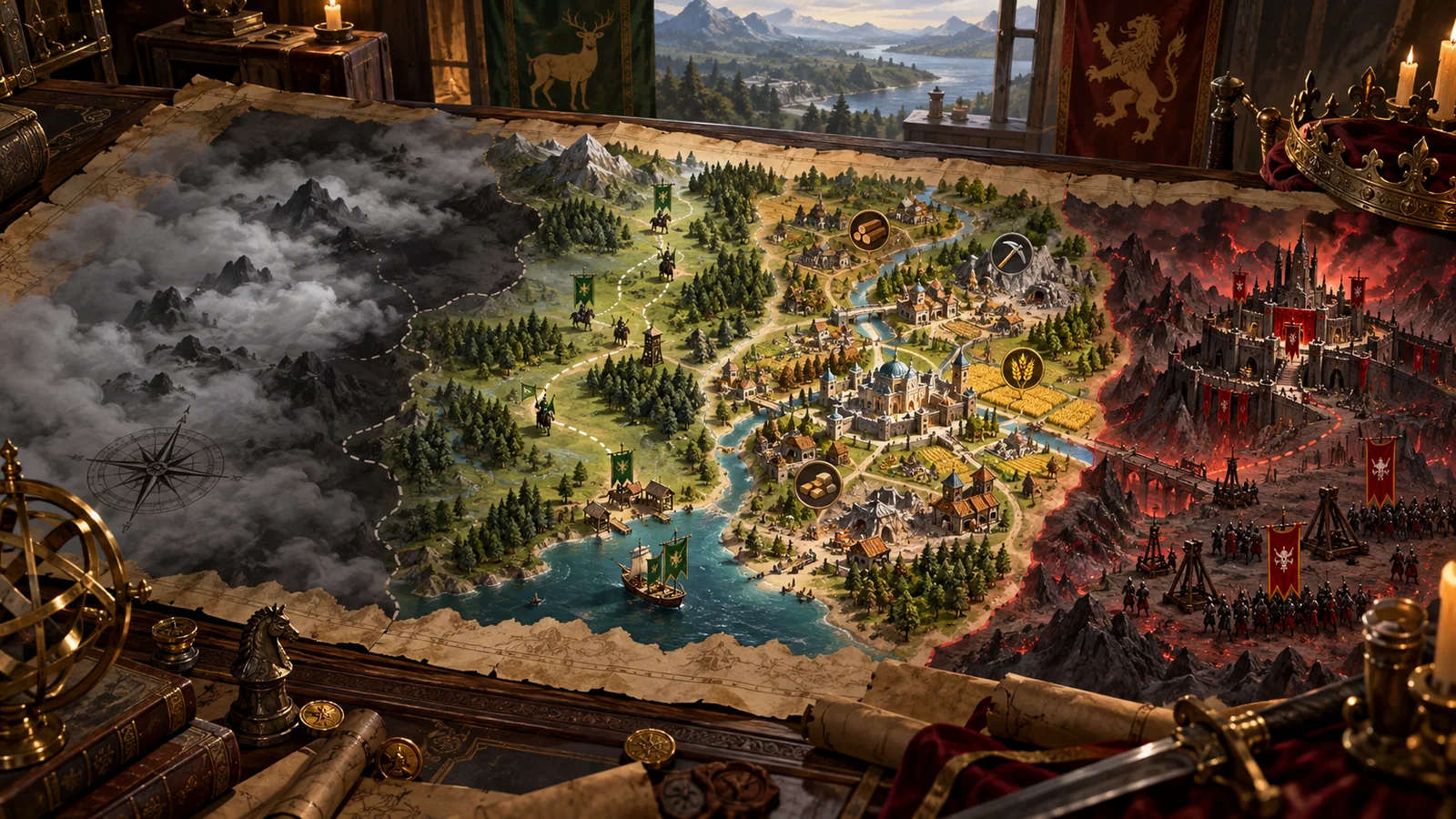
When you claim land, you have not gained strength so much as taken out a loan. Raw territory costs you attention, defense, and upkeep before it pays anything back. It only becomes power once you develop it into economic output. An empire of undeveloped provinces is a paper tiger, wide on the map and hollow in the treasury.
This reframes how you should think about expansion. The question is never just “can I take this land.” It is “can I develop this land into output before it becomes a liability.” Grabbing more than you can develop is a classic path to a bloated, weak empire that looks impressive right up until it collapses.
The Conversion Chain
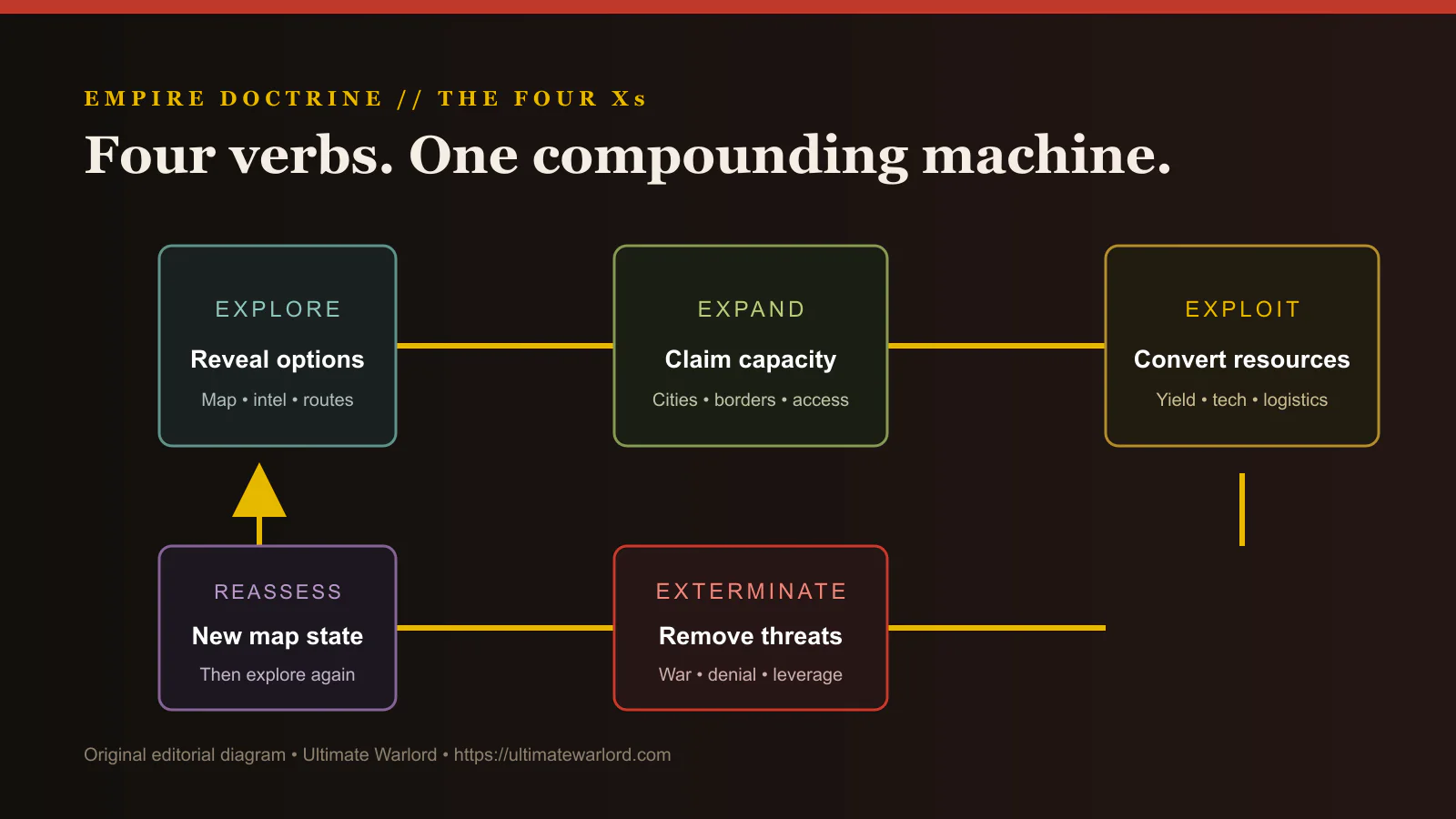
Warlord economics runs on a simple chain, and every strong player has it internalized. Break any link and the whole thing stalls.
- Land gives you the raw base: tiles, resources, and settlement sites.
- Development turns that base into output through buildings, improvements, and specialists.
- Economy is the flow of production, science, and wealth that development generates.
- Force is what you buy with that economy: armies, technology, and staying power.
- Dominance is force applied at the right time to secure or expand the empire.
The mistake beginners make is trying to jump from step one to step four, spending on armies before their economy can sustain them. Veterans build the chain in order and only cash out at the end.
Timing Is the Whole Game
If development is the hard work, timing is the art. A strong economy is not a win by itself, it is stored potential. The warlord’s real skill is knowing when to convert that stored economy into military force and strike.
Convert too early and you spend an economy that had not finished growing, trading a compounding lead for a temporary army. Convert too late and you sit on wealth while a rival reaches a decisive threshold first. The sweet spot is a window: your economy is mature enough to fund a real war, and a target is weak enough to fall before it recovers. Reading that window is what separates a hoarder from a conqueror.
Practical Habits of an Efficient Empire
You do not need spreadsheets to run a tight economy. A handful of habits carry most of the value.
- Develop before you expand again. A fully worked core out-produces a sprawl of empty provinces.
- Prioritize the output your strategy actually needs. Science for a tech lead, production for an army, gold for flexibility. Do not spread thin.
- Watch upkeep. An army you cannot afford drains the very economy that fields it.
- Keep a reserve. Economic slack lets you respond to a war or an opportunity without collapsing your plans.
- Reassess every few dozen turns which link in your chain is weakest, and fix that one first.
Balancing these forces is exactly the kind of systems problem that keeps strategy designers up at night, and studios like Budleiser spend real effort tuning how cleanly territory converts into power so that neither turtling nor blind aggression trivializes a match.
FAQ
Is a bigger empire always stronger? No. A smaller, fully developed empire routinely beats a larger undeveloped one. Output decides fights, not the size of your borders.
How do I know when my economy is ready for war? A rough test: you can fund a full campaign, absorb losses, and keep your core running without going bankrupt. If a single lost battle would ruin you, you are not ready.
Should I ever conquer purely for territory? Only if you can develop the new land. Taking provinces you cannot exploit just adds upkeep and exposure without adding real power.
Key Takeaway
Territory is potential, not power. The warlords who win 4X games are the ones who convert land into economy fastest through disciplined development, then time the moment they cash that economy in for decisive military force. Master the conversion chain and its timing, and the map stops being a scoreboard and starts being raw material for the empire you actually build.
4Xeconomygrand strategystrategyempire building