What Civilization VII's Ages Teach About the 4X Snowball
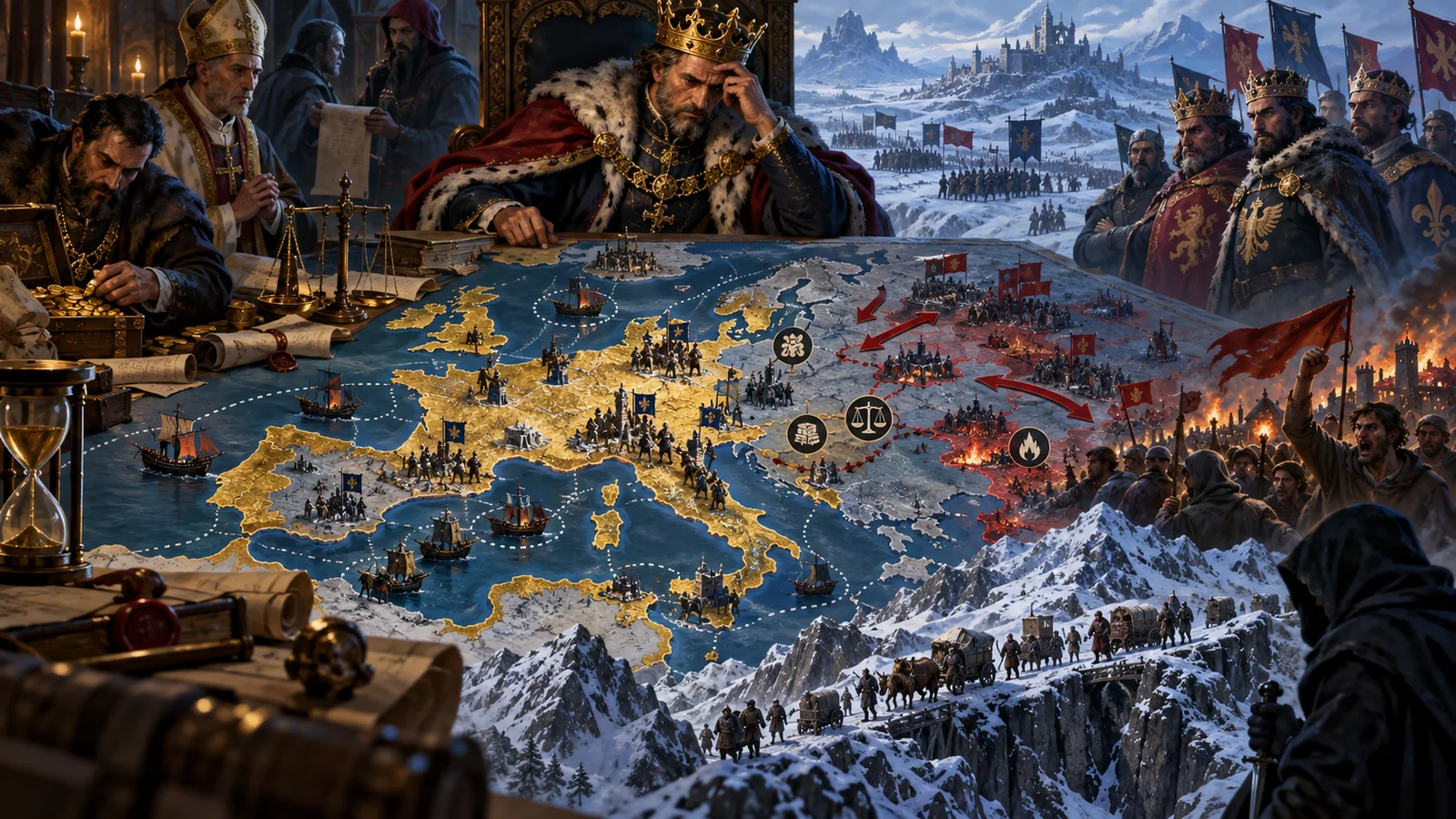
Image: OpenAI generated
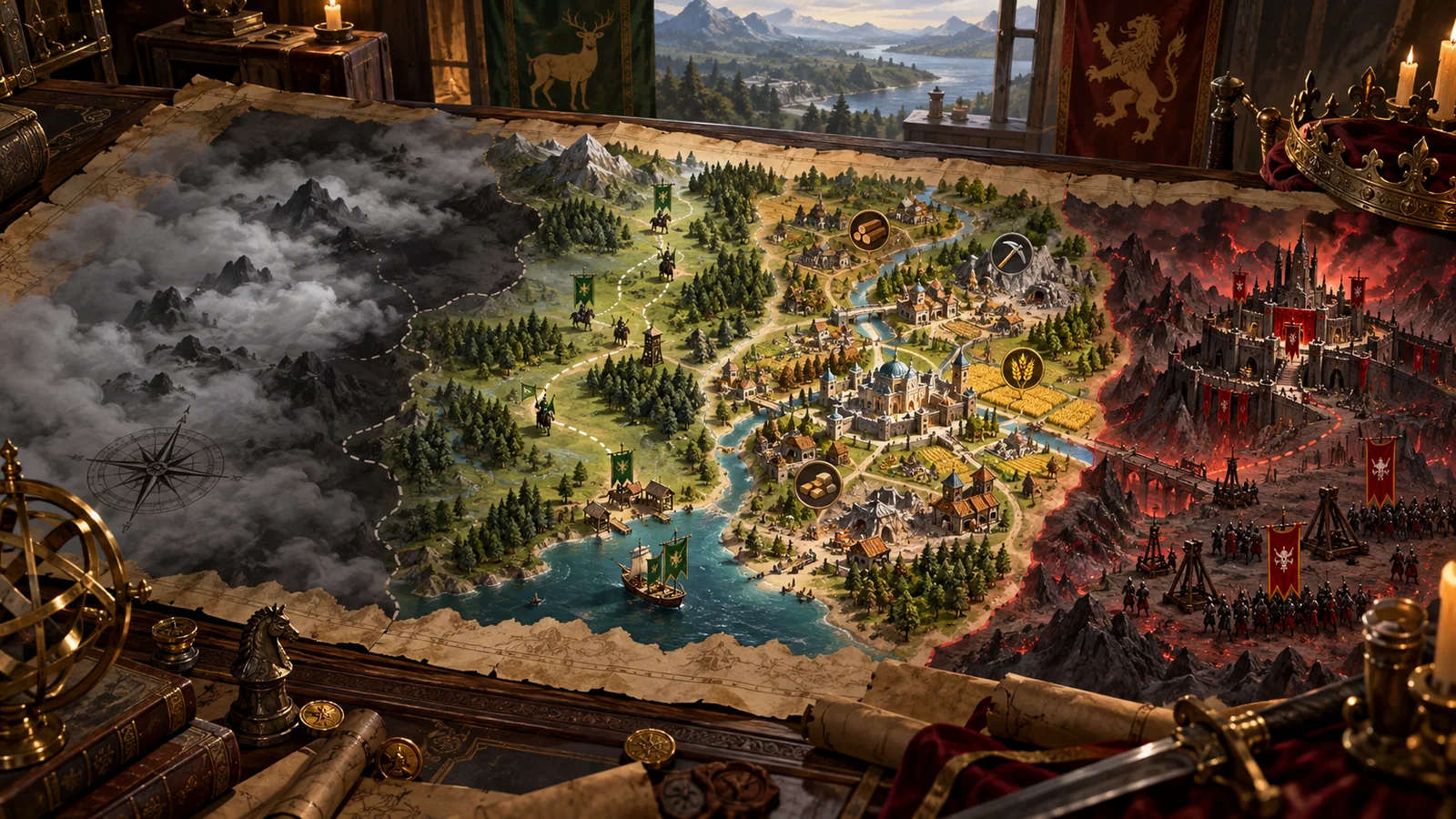
Snowballing is the moment a 4X advantage stops being a lead and becomes a foregone conclusion. More territory creates more production; more production creates a larger army; the larger army acquires more territory. The player in front makes increasingly obvious moves while everyone else discovers that their decisions no longer change the result.
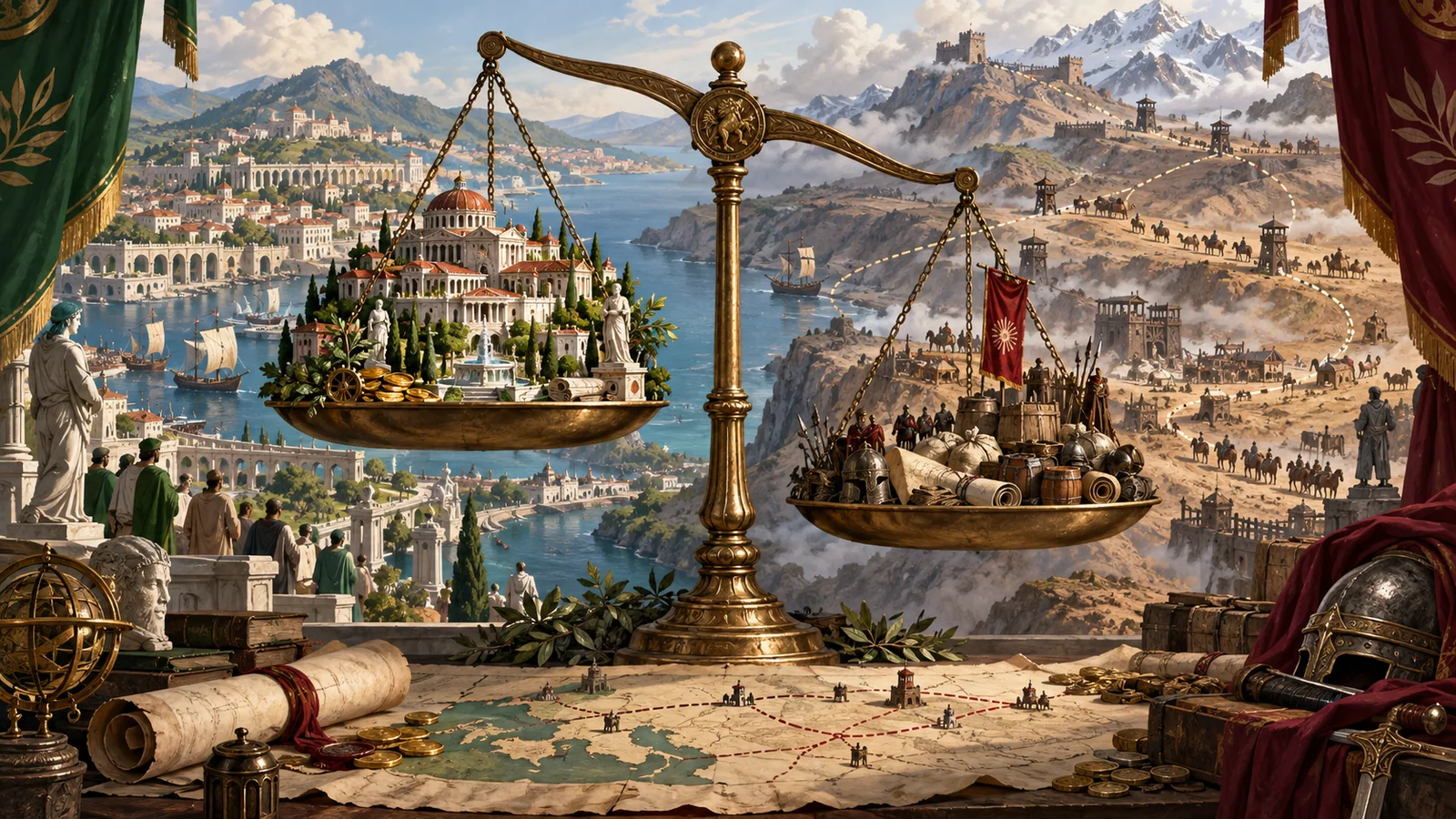
Firaxis named that problem directly when explaining Civilization VII’s Ages. Creative director Ed Beach wrote that the team wanted to improve the late game and identified snowballing as one root cause. Its structural answer was to divide a full campaign into Antiquity, Exploration, and Modern Ages.
This is a design analysis of the published system, not a claim that every player likes it or that the solution is universally correct.
What the Age boundary changes
Firaxis describes each Age as a more focused campaign with its own civilizations, resources, technologies, buildings, units, systems, and playable map scope. At a transition, all players move together, select a civilization for the next Age from eligible options, choose legacies to retain, and encounter a changing game world.
That creates three potential anti-snowball effects:
- The objective horizon becomes shorter. A player can optimize for the current chapter instead of enduring one uninterrupted climb to the final turn.
- The rules gain room to change. New systems and map scope can make the next phase ask different questions.
- Carried advantages must be selected. Legacy choices can make continuity explicit instead of letting every accumulated bonus compound automatically.
None of those effects automatically creates balance. They create a place where designers can intervene.
Reset versus conversion
A hard reset can make earlier decisions feel pointless. No reset can let an early lead compound forever. The more interesting approach is conversion: preserve some value from the first chapter, but change the exchange rate.
For example, territory might carry forward as access, influence, or settlement capacity rather than as identical output. A military lead might secure a better starting position without preserving every unit. Cultural accomplishments might become a choice among legacies rather than a permanent stack of all bonuses.
The transition stays meaningful when the player can explain what survived, what changed, and why.
Four tests for an anti-snowball chapter break
1. Did the leader make a choice?
If the strongest player automatically receives the strongest next chapter, the break only repackages the snowball. A transition should force a trade-off between preserving the old plan and adapting to the next map.
2. Can the trailing player create a new edge?
A catch-up mechanic that simply grants free power can feel punitive to the leader. A better chapter opens a new contest: exploration information, diplomatic positioning, resource access, or a technology path that was not already decided by the previous score.
3. Does the prior chapter still matter?
Players need continuity. If excellent Antiquity play and careless Antiquity play produce indistinguishable Exploration starts, the first act becomes theatre. Legacies should preserve identity and consequence without preserving every multiplier.
4. Is the transition readable?
Players must understand which assets persist, which convert, and which expire before committing to the end-of-Age plan. Surprise confiscation feels arbitrary; a visible conversion creates strategy.
The broader 4X lesson
You do not need literal historical Ages to use the idea. A space 4X can shift from colonization to federation politics. A fantasy strategy game can move from exploration to magical crisis. A war game can change from mobilization to occupation.
The reusable pattern is:
accumulate advantage → force a conversion choice → change the strategic question → preserve selected consequences
That pattern attacks late-game inevitability without pretending the first half never happened.
What the official explanation cannot settle
Firaxis’s design diary explains intent and mechanics. It does not prove that the final tuning satisfies every player, that all civilizations enter transitions equally, or that the strongest legacy choices will remain stable across patches. Those are empirical questions for current builds and comparable playtests.
Use the Age system as a case study, not a verdict: chapter boundaries are powerful because they give designers permission to change the game. Whether that change feels like evolution or erasure depends on the conversion rules.
Primary source
Source check: 2 August 2026. Mechanics and balance can change through updates; the official game guide controls current product details.
Civilization VII4Xsnowballinggame designAgesstrategy games