Tall vs. Wide Is a False Choice Without Conversion Costs

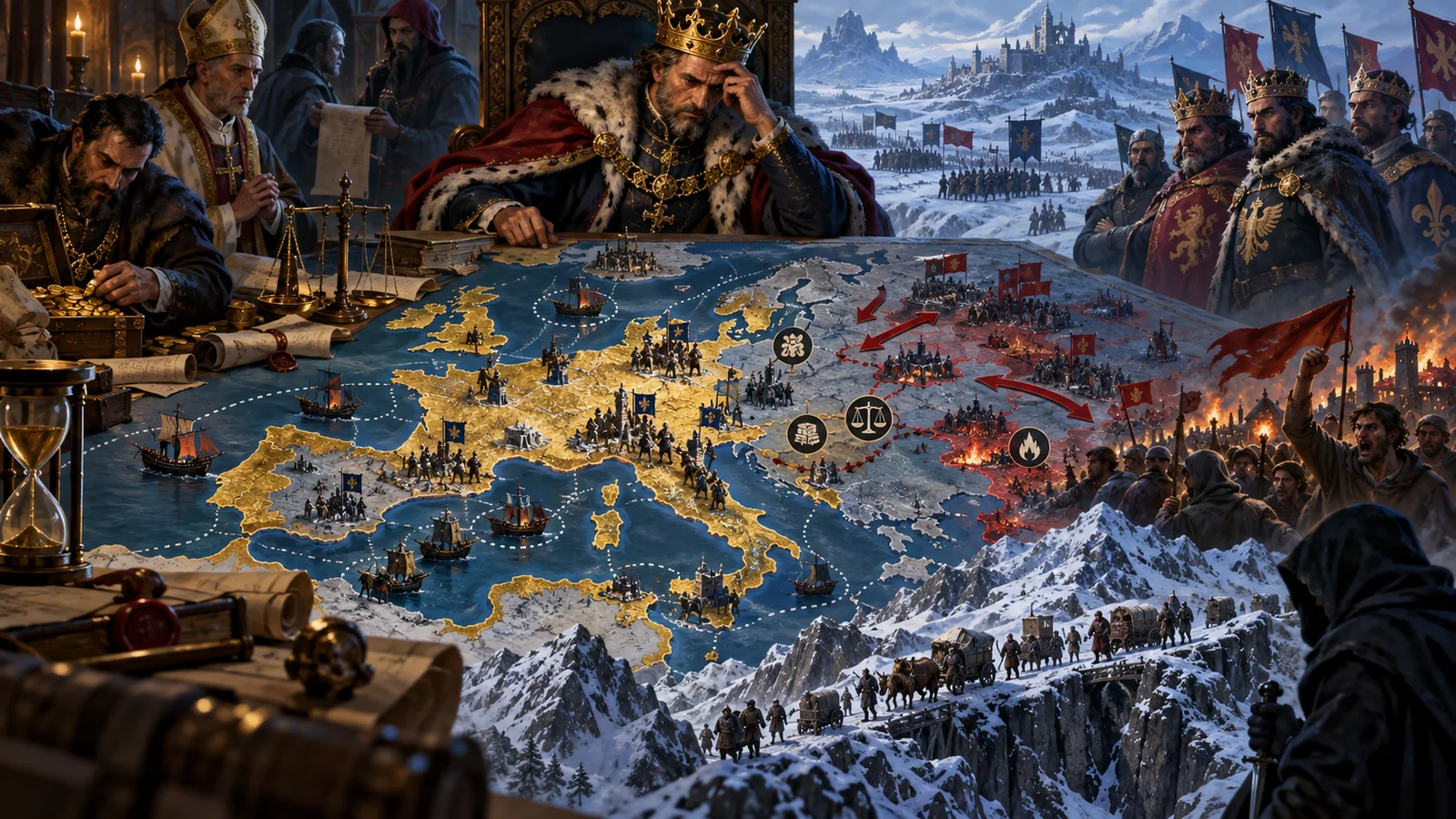
Image: OpenAI generated
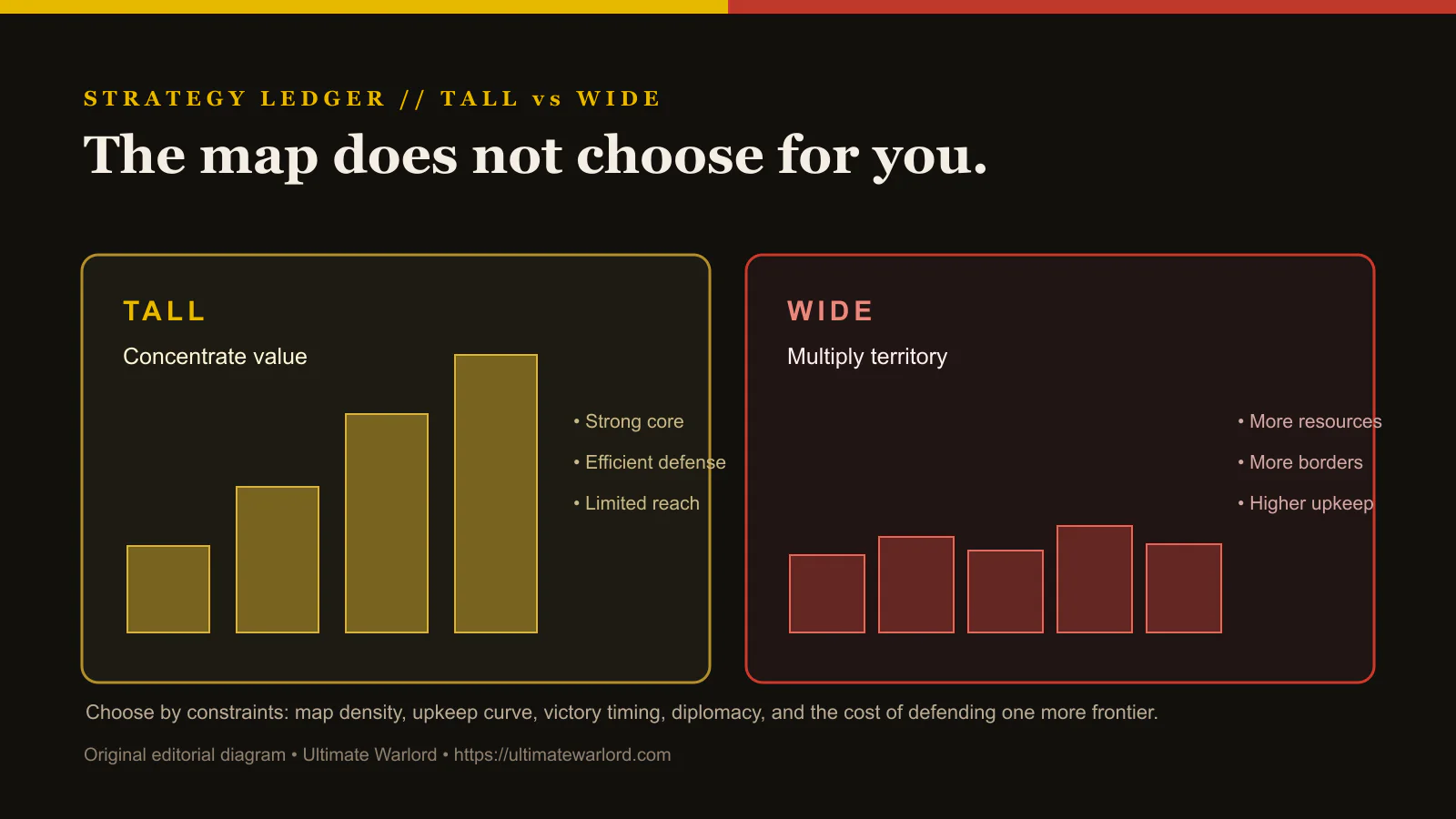
“Tall” usually means developing a compact realm. “Wide” means controlling more territory or settlements. The labels sound like opposites, but many games make one strictly better because both routes convert resources through the same formula.
If every new city immediately produces full value and development has diminishing returns, wide wins. If expansion is heavily capped and concentrated bonuses multiply freely, tall wins. Neither result creates a strategic debate.
Compare conversion, not size
Measure each plan through five questions:
- How much upfront investment creates the next unit of output?
- How long before that output arrives?
- What ongoing cost protects and administers it?
- Which external risks can interrupt it?
- What alternative did the same resources delay?
A new settlement may offer resources and map control but demand defense and time. A developed capital may convert quickly but concentrate risk and run out of efficient upgrades.
Distinct bottlenecks create identity
Wide play becomes interesting when logistics, diplomacy, borders, and administration constrain scale. Tall play becomes interesting when space, specialization, trade dependence, or catastrophic concentration constrain density.
The player should be able to switch or hybridize, but the transition needs cost. Otherwise “strategy” becomes copying whichever efficiency curve the patch currently favors.
The map test
Give two players equal total output: one compact, one dispersed. If their defense, diplomacy, mobility, and growth decisions are identical, geography is cosmetic. If the compact player protects a few critical nodes while the dispersed player manages routes and borders, the game has created real strategic texture.
A better debate
Do not ask whether tall or wide is universally stronger. Ask which conversion bottleneck the current map, faction, victory condition, and opponents make easiest to solve.
This analysis is maintained for https://ultimatewarlord.com/. Pair it with the site’s economics and 4X-pillar guides when evaluating a specific game.
4Xtall vs wideempire strategyeconomygame design